


Introduction
NAPHX gas chromatograph array system decouples the integrated analytical functions of traditional instruments and distributes them to an intelligent array composed of N independent, efficient gas chromatographs. Units operate synchronously, asynchronously, or grouped in timing modes, greatly improving productivity and efficiency.
Each NAPHX GC gas chromatograph is a fully functional, miniaturized, lightweight, reusable, and intelligently designed “analysis unit,” equipped with an independent injector, chromatographic column chamber, detector, gas and temperature control systems, as well as signal acquisition and data analysis systems, dedicated to analyzing specific target components.
The NAPHX GC gas chromatograph supports mounting conventional capillary columns into internal small column boxes, enabling rapid program heating and shorter cooling times. Supports automatic full-scale FID and TCD detectors, as well as extended FPD and PID detectors, making it widely applicable in scientific research, petrochemical, natural gas, power testing, environmental monitoring, coal mine safety, and process control.

Features
> Block-style array design, flexible expansion to adapt as needed
Users can freely combine chromatograph units like building blocks according to actual testing needs; The chromatograph unit supports seamless hot-swapping, with software automatically identifying and updating array configurations; Each unit can have interchangeable column boxes backed up with each other.
> System is decentralized, stable, reliable, and has lower maintenance costs
Each unit is designed to be decentralized and independent, with a closed loop focused on specific components to avoid cross-contamination interference; In case of faults, it can be quickly located to the unit based on abnormalities and replaced directly, making it fast and efficient.
> Analytical throughput is multiplied, and sampling intervals are significantly shortened
N independent instruments process in parallel, breaking down analysis tasks and executing them in synchronous, asynchronous, or grouped timing modes, significantly reducing sampling intervals.
> Small size and high energy, easy and quick to install and use
Featuring miniaturized and lightweight designs, the instrument unit size and weight are greatly reduced, allowing flexible layout across multiple dimensions according to actual space. The minimalist interface allows users to easily build array systems independently.
> Distributed data processing, providing powerful analytical capabilities
Equipped with high-performance microcomputers, multiple independent chromatographic analysis units within the array can be configured as localized distributed clusters, driving the system to achieve fully automated and intelligent analysis workflows.
Chromatogram
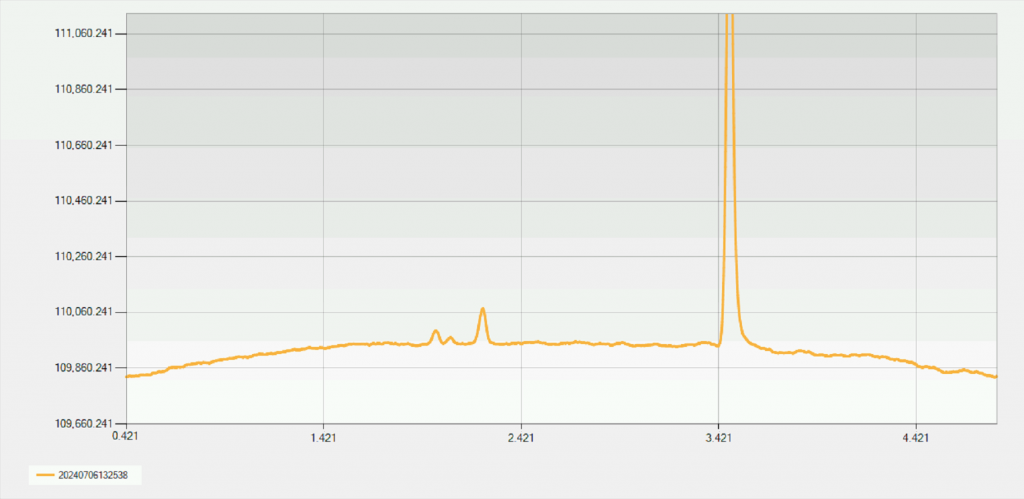
He 2ppm / Ne 2ppm / H2 2ppm @TCD
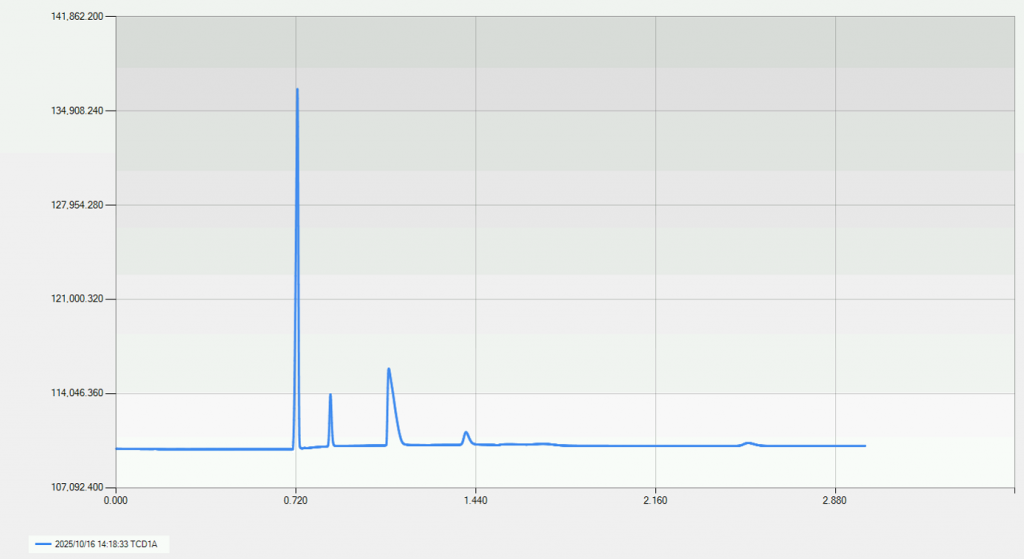
H2 / O2 / N2 / CH4 / CO @TCD
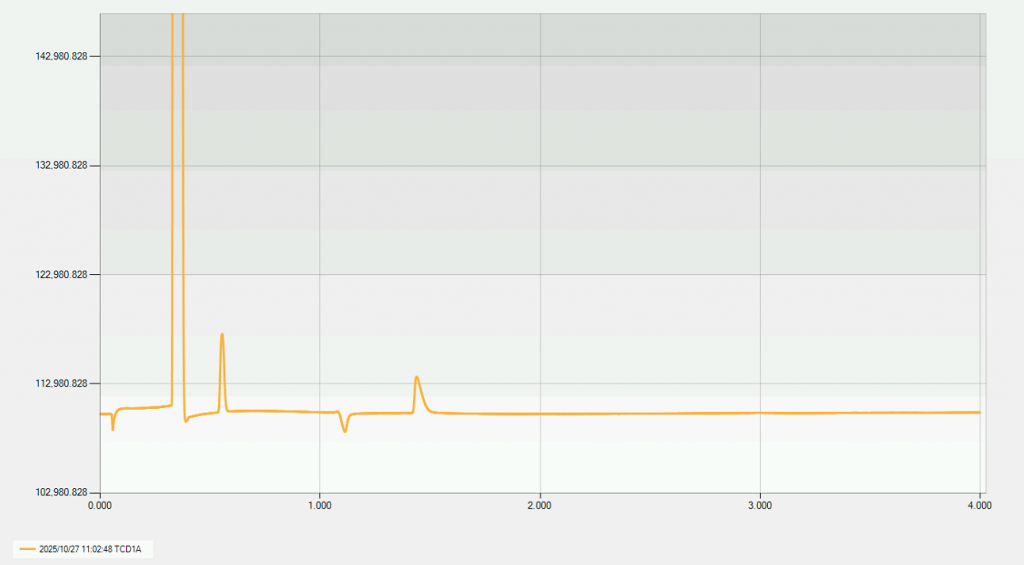
COS 500ppm / SO2 500ppm @TCD

C3 – C5 500ppm @TCD (30sec)
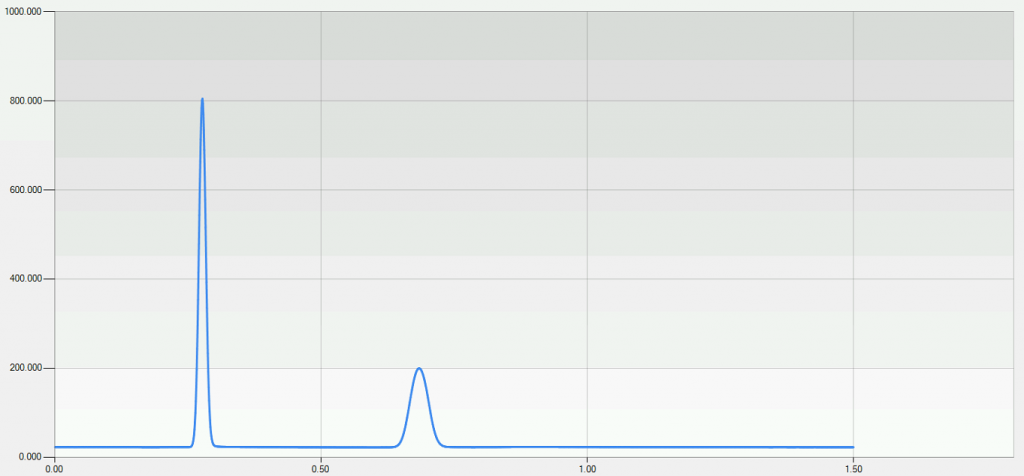
THC 200ppm / CH4 200ppm @FID
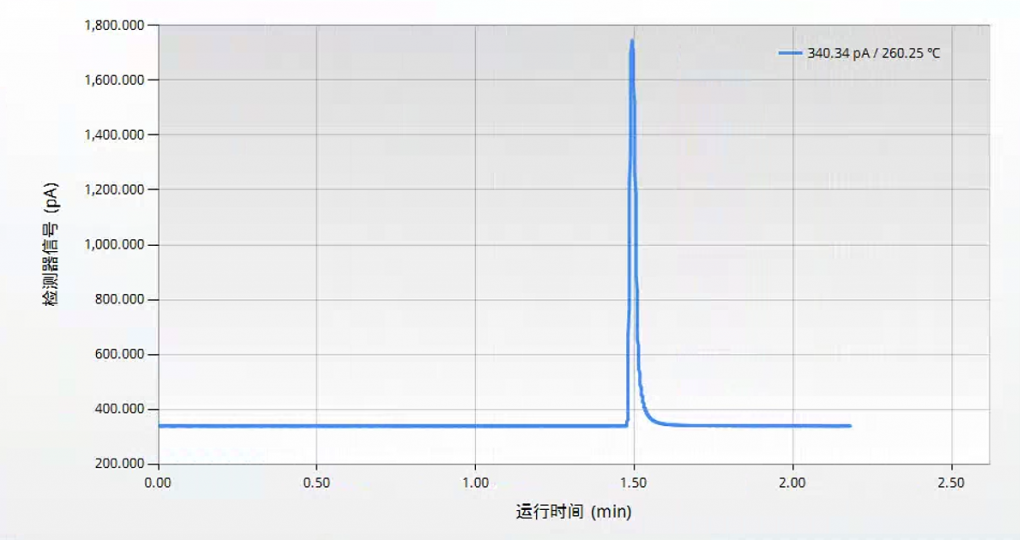
H2S 100ppm @FPD

Light Hydrocarbons C1-C5 Saturated and Unsaturated
@TCD
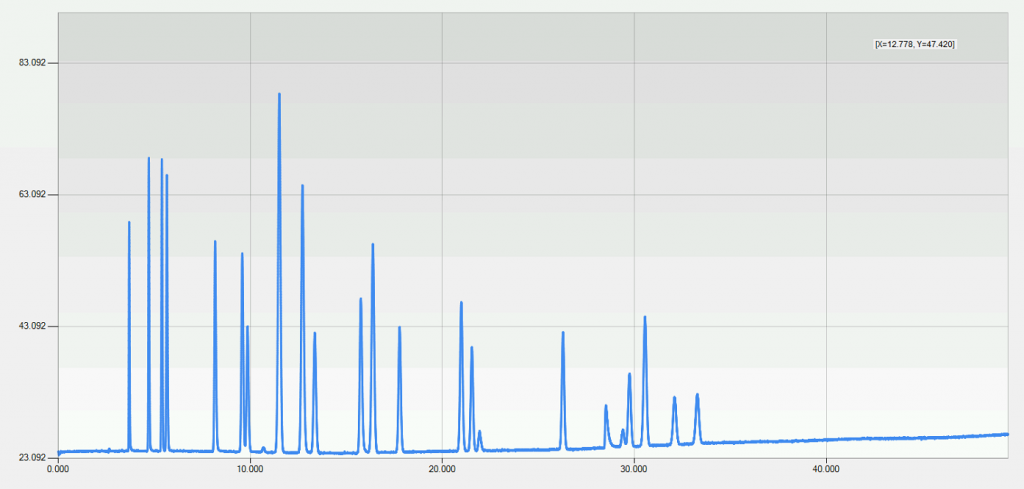
Residual Solvents @FID
Specifications
Retention time reproducibility: < 0.1% RSD, peak area reproducibility: < 0.5% RSD.
Up to 4 EPC channels, supporting constant pressure and program pressure control, with 3-step pressure/flow gradients. Standard atmospheric pressure and temperature compensation functions. The pressure setting value and control accuracy reach 0.001 psi, ensuring better repeatability of the holding time. Configurable flow sensors for divergent/non-split sample intake.
Carrier gas pressure and leak alarm functions; carrier gas saving mode helps reduce gas consumption. Selectable carrier and tail blow types: He, H2, N2, Ar, and Air.
The column temperature chamber can accommodate capillary columns up to 60 meters long, with temperature control accuracy of 0.01°C (0-100°C) or 0.1°C (above 100°C), supporting 8-step column box temperature gradients.
The injection method is direct injection, split / splitless injection, and can be injection or pump sampling.
All detectors are equipped with EPC control, and each unit can install up to 2 TCD detectors, or 1 FID and 1 TCD detector.
The FID detector responds to most organic compounds, with fully automated operation outputting full-scale digital data, minimum detection limit: 50 ppb, linear dynamic range: 107 (±10%). Capable of quantitative analysis of peaks across the entire 107 concentration range in a single run.
The TCD detector is a general-purpose detector that responds to all compounds except carrier gases, with fully automated operation outputting full-scale digital data. Minimum detection limit: 500 ppb, linear dynamic range: 106 (±5%), uninterruptible signal polarity switching and carrier gas type change.
Communication includes LAN, WIFI, RS232, and digital I/O.
The operating environment temperature ranges from ambient to 50°C.
Power: 24VDC 50W (iso thermal) / 90W (temperature programming) / 160W (temperature programming).
Dimensions: height 11.9 cm, width 9.0 cm, depth 34.9 cm
Typical weight: 2.0 – 4.0 kg
Application
Permanent gas analysis,
Environmental volatile gas analysis / low-concentration benzene series analysis
Transformer oil dissolved gas analysis,
Petroleum/natural gas exploration, rapid mud logging
LPG analysis
LNG analysis
Natural gas / calorific value determination
Simple to complex refinery gas analysis
Mine gas analysis
Carbon dioxide reduction analysis
Specialty gas analysis and quality control
Syngas and catalytic reaction evaluation
Biogas analysis
Artificial gas analysis
Sulfide gas analysis
Fuel cell gas analysis,
Earthquake hot spring gas analysis
Landfill gas analysis
Solvent residue analysis
Hazardous chemical assay gas analysis