For a long time, traditional gas chromatography has been trapped in a linear paradigm, with complex internal column box valve plumbing and a lengthy separation of samples before reaching the detector. This inherent “serial” model becomes increasingly prominent in the face of long analysis cycles, lengthy sampling intervals, cumbersome systems, and complex maintenance when facing the pursuit of efficiency in laboratory analysis and rapidly changing industrial sites.
We have always wondered: why must we remain confined by the physical limits of a single device? Why can’t the wisdom of “parallel processing” be introduced into this field of precise analysis?
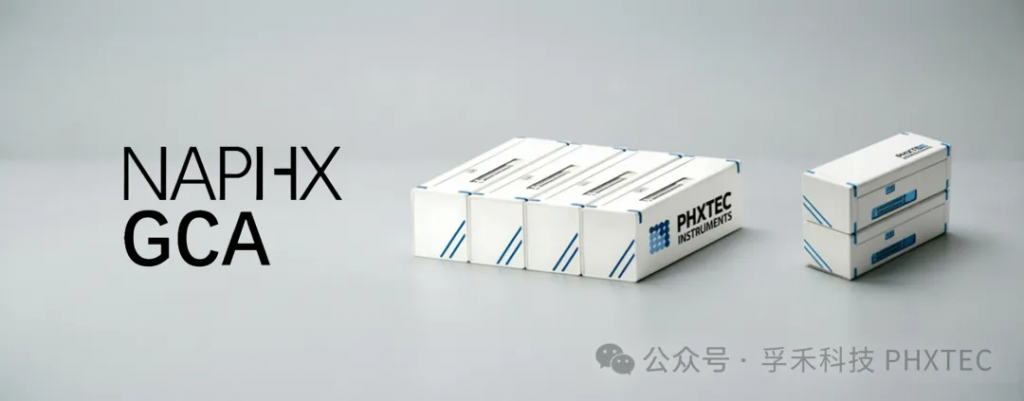
In today’s pursuit of ultimate efficiency and precise insight, we have provided the answer. PHXTEC has officially launched a breakthrough product that redefines and reshapes the future—the NAPHX GCA Gas Chromatograph Array System. It is not just a new instrument, but a significant reconstruction of the underlying logic in the field of gas chromatography, marking a new shift in gas chromatography technology from “single-cell precision” to “system intelligence.”
The NAPHX GCA gas chromatograph array system completely breaks the limitations of traditional instrument integration and complexity. We no longer pursue building a maze of valve paths within a single machine, but instead creatively decouple analytical functions and distribute them to intelligent arrays composed of N independent, efficient gas chromatographs. Each chromatograph is a fully functional, miniaturized, lightweight, reusable, and intelligently designed “analysis unit,” equipped with an independent sampler, chromatographic column box, detector, gas and temperature control systems, as well as signal acquisition and data analysis systems, dedicated to analyzing specific target components. They operate like well-trained teams, operating in synchronous, asynchronous, or grouped timing modes, which greatly shortens the originally lengthy analysis cycle and increases sampling frequency several times over.
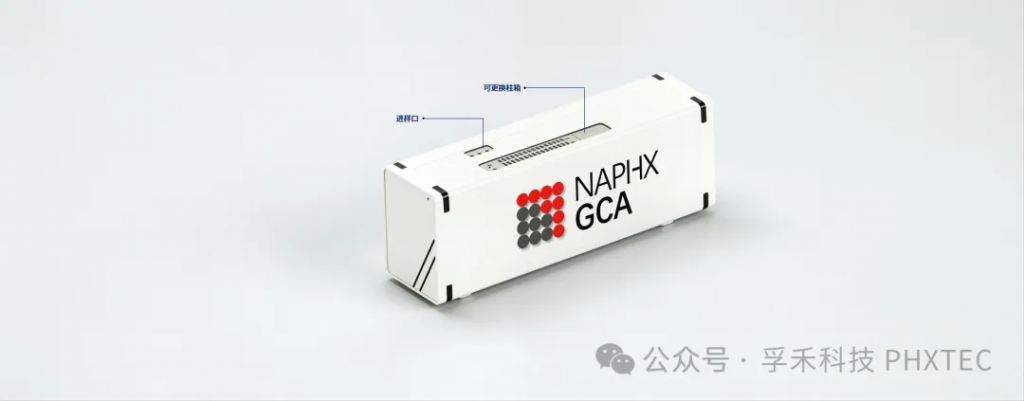
This is not only a victory of speed and a transformation in volume, but also a liberation of flexibility. Our system adopts a pioneering “block-style” architecture, allowing users to freely combine and flexibly configure them like building blocks according to their own analysis needs. Whether you need to analyze laboratory process responses or focus on critical monitoring in specific industrial processes, you can update configurations for different applications and deploy quickly. This array design not only makes installation, configuration, expansion, and maintenance easier than ever, but also ensures outstanding reliability—if any unit in the array needs maintenance, the others can continue to operate as usual, ensuring your analysis tasks run nearly continuously.
The birth of the NAPHX GCA gas chromatograph array system stemmed from our bold challenge to the “impossible triangle.” We refuse to compromise between speed, separation, and volume. Through the “space for time” strategy, we have maintained the high resolution and sensitivity of a single instrument while achieving unprecedented analytical throughput through a parallel architecture. Through miniaturization, lightweight design, reusability, and intelligent design, not only are array size and system weight significantly reduced, but overall costs are also significantly reduced. This is no longer just a patch of traditional instruments, but a thorough upgrade in thinking—replacing “centralized complexity” with “distributed intelligence,” and breaking the bottleneck of “individual performance” with the wisdom of “system integration.”


> Block-style array design, flexible expansion to adapt as needed
We completely abandoned the traditional bulky integrated body and pioneered the “block-style” array design. Users can freely combine chromatograph units like building blocks according to actual testing needs.
Flexible configuration: Whether adding new target components or expanding the monitoring range, simply add or remove the corresponding chromatograph units in the array. Chromatograph units can be quickly replaced according to new task requirements, enabling reconfiguration of application functions.
Plug and play: Supports seamless hot-swapping, with software automatically recognizing and reconfiguring the system, enabling unit installation within 5 minutes, significantly lowering the threshold for on-site deployment and application configuration.
Redundant backup: Each instrument can be independently replaced with a rapid program heating column box, allowing multiple units to be used for redundant backup to provide dual protection for critical applications.
> System is decentralized, stable, reliable, and has lower maintenance costs
Each unit in the array is an independent closed-loop system with complete “injection-separation-inspection-analysis” functions. This decentralized design brings extremely high stability.
Fault Isolation: Quickly locates faults to individual units based on anomalies. When repairing or replacing this unit, it does not affect the normal operation of other units at all, greatly improving overall system reliability.
Specialized analysis: Each instrument focuses on specific components, avoiding cross-contamination and baseline drift caused by complex plumbing, resulting in more accurate data.
Easy maintenance: Traditional single-unit gas chromatograph repairs take about several hours or even days, forcing user analysis to stall. The NAPHX GCA gas chromatograph array system can replace backup faulty units within minutes, quickly restoring the analysis process. The array design makes overall maintenance exceptionally simple, effectively reducing operation and maintenance costs.
> Analytical throughput is multiplied, and sampling intervals are significantly shortened
We have completely broken through the bottleneck of traditional single-machine serial analysis. By processing in parallel with N independent instruments, analysis tasks are broken down and executed in synchronous, asynchronous, or grouped timing modes, resulting in an exponential increase in overall analysis speed.
This means that analyses that previously took over ten minutes or even longer to complete with a single machine can now be completed in 2-3 minutes or even less, greatly reducing sampling intervals and truly achieving a leap from “post-test testing” to “real-time monitoring.”
> Small size and high energy, easy and quick to install and use
Each gas chromatograph in the array adopts a miniaturized and lightweight design, significantly reducing equipment size and weight while maintaining high performance. Each cell weighs only 2-4 kg, reducing the weight of over 90% compared to the traditional gas chromatograph unit of 40-50 kg.
The array can be flexibly arranged in multiple dimensions according to actual space; even if multiple units are connected in parallel, the total volume remains much smaller than a single traditional instrument, saving you valuable laboratory or on-site installation space.
Taking a typical dual-column dual-detector TCD+FID configuration as an example: NAPHX GCA (2×1) occupies only 0.06 m² of the tabletop area (the size of A4 paper) and has a volume of just 0.007 m³. For comparison, mainstream traditional gas chromatographs occupy 0.3 m² of surface and 0.14 m³ of volume — NAPHX GCA occupies only one-fifth of that footprint and only one-twentieth of its volume.
Installation and deployment are equally efficient: Traditional single-unit gas chromatographs are cumbersome to set up, time-consuming to install, and heavily rely on professional engineers for on-site commissioning. The NAPHX GCA array system adopts a minimalist interface design, requiring only connection to power, network, and carrier gas, and connecting to the sample injection pipeline, enabling rapid deployment within one hour. Users can even build array systems themselves, greatly shortening the overall cycle from communication to launch.
> Distributed data processing, providing powerful analytical capabilities
The NAPHX GCA gas chromatograph array system is not only a hardware architecture revolution but also a complete intelligent analysis solution. Each unit in the array can be equipped with a high-performance microcomputer, forming a localized distributed cluster of multiple independent chromatographic analysis units, driving the system to achieve fully automated and intelligent analysis workflows.
Parallel processing, scalable computing power on demand: Cluster computing power scales in sync with array scale; the more units, the stronger the cluster’s processing capability, eliminating data processing bottlenecks.
Data fusion for unified result output: Multi-unit analysis data is automatically aggregated and integrated via the bus, ultimately presented in a unified report format, eliminating the need to manually stitch together the results from multiple instruments.
Remote operation and maintenance, real-time status verification: supports local network and cloud connectivity, allowing users to remotely monitor system operating status, diagnose faults, and update methods, significantly reducing on-site maintenance frequency.
The new NAPHX GCA gas chromatograph array system by PHXTEC is not just a product iteration, but a revolution in analytical concepts. It will bring you unprecedented analysis speed, system stability, and application flexibility, injecting new momentum into intelligent and refined control of laboratory analysis and industrial online monitoring